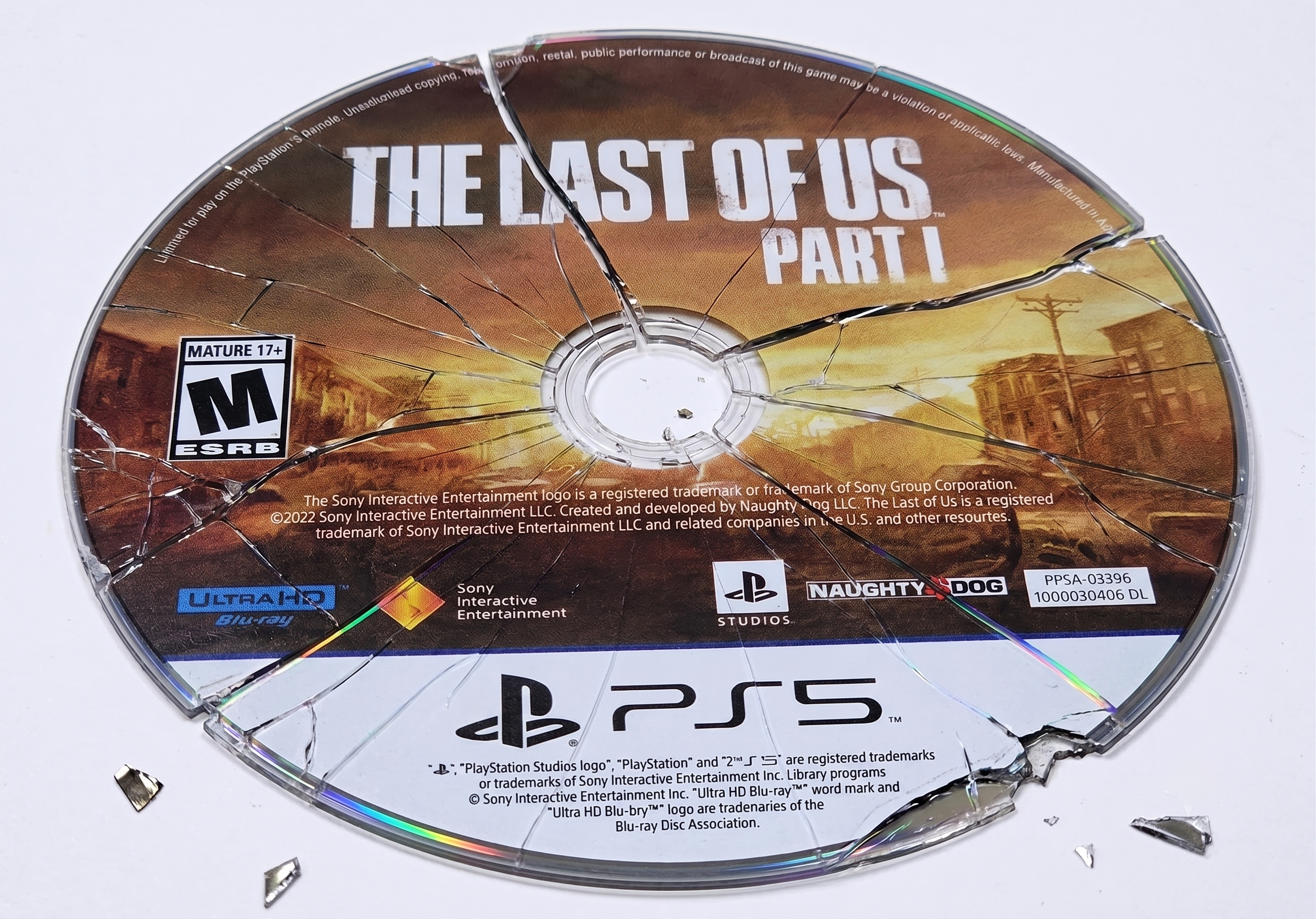
A month ago I wrote about the disc going away. Since then, Sony doubled down, a petition hit six figures, and a protest got organized. None of it is going to work, and honestly, none of it is even aimed at the right target.
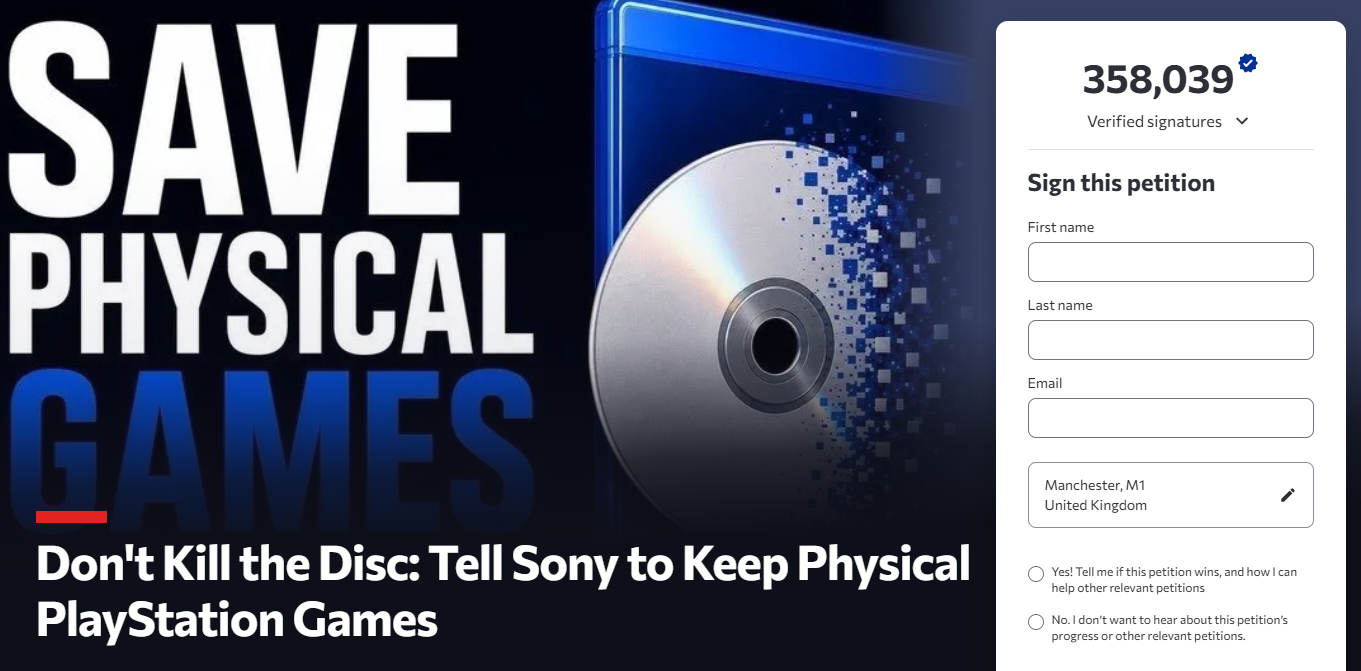
By the time Sony's Q1 earnings call happened, the backlash was already well underway. The Change.org petition had been climbing for weeks and was already sitting north of 330,000 signatures. The PS5 Blackout had already been announced on July 26, a week in late August where organizers are asking PlayStation users to completely disengage. No logins, no purchases, nothing.
So when CFO Lin Tao got asked directly about the backlash on August 1, during that Q1 earnings call, she wasn't reacting to something new. She was responding to a protest and a petition that had already been building for over a week. Her answer wasn't a walk back.

Sony CFO Lin Tao
"At this point in time, we are not seeing any impact on our business," Tao stated. "But going forward, about the content sales, a large part is already digitised. And therefore, as a result of the discontinuation of discs, we don't see that there will be any negative impact on our business. However, as I already said, the users, the players have attachments, and we have to think about how to respond to that feedback." She also added that they had carefully considered the move and will "cautiously move this forward."
That is corporate for we heard you, and we're doing it anyway.
Here is what people have to realize about that quote. Sony isn't lying. As a publicly traded company, it is illegal for them to lie to their shareholders about material financial impacts. If the backlash was actually hurting their bottom line, they would be legally obligated to disclose it on that call. The fact that Tao flat out stated there is no negative impact means the internal data backs her up. The transition to digital is already so dominant that the outrage hasn't dented their actual revenue.
I get the energy behind all of it. But let's actually look at what's happening here, because I think everyone is missing the forest for the trees.
Here's the thing that should tell you everything. Every major platform and publisher is heading toward all-digital. I said this in the first piece. Nintendo, Xbox, Rockstar, all moving the same direction. So ask yourself, if there was real pushback from inside the industry, from actual game makers who thought this was a mistake, don't you think somebody would have said something by now?
Nobody has. And that is not an accident. Sony announced it first, Sony absorbs the backlash, and everyone else gets to quietly follow once the outrage cycle burns out. That is not a conspiracy. That is just how an industry moves when everyone benefits from the same outcome and nobody wants to be first to say it out loud.
I said this before and I will say it again because it matters. This trend did not start July 1st. We were hearing rumblings about the PS4 possibly going discless back in the PS3 era. That is over ten years of the industry telegraphing exactly where this was headed. The disc dying is not new information. It is just finally arriving.
So being shocked and outraged at the moment it actually happens, after a decade of warning signs, is missing what the real fight should have always been about.
Here is what everyone keeps getting wrong. The disc was never the actual problem. The problem is what happens the moment you click agree on a EULA. You are not buying these games. You never really were, not in the way you think. You are licensing access, and that license can be changed, revoked, or altered at the company's convenience.
This is not new to gaming either. Think about it in terms of something simple. Ever notice how old shows you stream now do not have the same theme song or the same music cues they had when they originally aired? Dawson's Creek is a great example. The intro is different now. Why? Because the licensing rights for the original music were never built for a streaming future that didn't exist yet. Nobody was thinking that far ahead when those contracts got written.
We are at the exact same inflection point right now with games. The industry did not think this through, and now we are the ones paying for that oversight. The fix is not saving the disc. The fix is forcing real digital ownership rights into these agreements going forward. If I own a digital license to a game, I should be able to play it offline, whenever I want, within reason. I am not asking for dead servers to come back online. I am not asking for Concord to still exist. I am asking for the actual files and licenses I paid for to remain mine and accessible.
And this is not just a gaming problem. This is a movie problem. This is a music problem. This is every form of digital media you have ever paid for. We need real, enforceable digital ownership rights across the board, not just for games.
There's a group of people who this hits harder than anyone else, and it's worth sitting with for a second. The people who get into gaming through borrowing a friend's copy, checking a game out from the library, or buying used because that's the only way they can afford to get in at all. That entire path disappears in an all digital world.
Look at the actual numbers. A game launches at seventy dollars. A year later that same physical copy is fifteen dollars used, sometimes less. Sometimes it's free because your local library has a copy on the shelf. That gap between seventy and fifteen isn't a minor discount. For a lot of people that gap is the difference between playing the thing everyone's talking about and not playing it at all.
Think about the kid whose only way into a new release is whatever their older sibling or cousin finishes and hands down. Think about someone who tries an entire genre for the first time because a library copy had no cost attached to it. That is a real, ordinary way people have gotten into this hobby for decades, and it quietly stops working the moment everything goes digital only.
I buy almost everything digitally at this point, but I never forget that not everyone can. Borrowing, lending, buying secondhand, these were never just conveniences. For a lot of people they were the entire on ramp into gaming in the first place.
This is exactly why the digital rights conversation matters more than the disc conversation. We need to figure out how lending and sharing can work on the digital side too. Some kind of licensed lending system, a formal secondhand digital marketplace, something nobody's thought of yet. Whatever the shape, it has to exist in some form.
Here is the uncomfortable part. It is probably not going to be us, meaning the United States. This country is about as corporation friendly as it gets, and I do not see the political will here to force real digital rights protections onto entertainment companies anytime soon.
If this gets fixed, my money is on somewhere like the EU doing it first. I used to work in phones, and the reason your iPhone finally has USB-C is because of European regulation, not because Apple woke up one day and decided it was the right thing to do. Europe has a track record of forcing standardization and consumer protection that the US just does not have the appetite for.
But even there, we are seeing exactly how massive of a legal mountain this is. Look at what just happened in June. The Stop Killing Games movement, the most organized, legitimate push for digital consumer rights in gaming history, hit a massive milestone. They gathered over 1.2 million verified signatures in Europe, which legally forced the European Commission to formally respond to their demand for a law protecting purchased games.
And what did the Commission do? They gave a polite, corporate rejection.
On June 16th, the EC declined to propose any new law, citing intellectual property and copyright walls. In their eyes, you cannot legally compel a company to make its proprietary code or servers available indefinitely. So instead of a binding law, they offered to explore a voluntary code of conduct for the industry.
If the EU, the exact governing body that strong-armed Apple into changing its hardware, is looking at digital game ownership and throwing their hands up because the copyright laws are too messy, that tells you exactly how hard this fight actually is. The legal framework of digital ownership is fundamentally broken, and it favors the publisher at every single turn.
We are losing the actual war on a legislative level right now, and nobody is paying attention because they are too busy posting pictures of their physical game collections.
Here's the part that actually matters going forward. Stop Killing Games didn't fold after getting rejected. Within hours of the EU's answer, they announced they're pivoting to get their protections written directly into the Digital Fairness Act, a separate piece of EU legislation that's already moving through the process. Instead of asking Brussels to write a brand new law from scratch, which is what just got shot down, they're trying to get the actual language inserted into a bill that's already alive and already has momentum. That is a smarter, more realistic path than starting over.
There's also real movement happening in the US, which people seem to have missed entirely because everyone was busy watching the EU story. California has an actual bill in front of it right now, AB 1921, also called the Protect Our Games Act. If passed, it would legally require publishers to either patch a game so it works after the servers go dark, provide some kind of playable end-of-life version, or straight up refund the people who bought it. It already cleared a State Senate committee hearing this summer. The ESA, the industry's own trade group, is fighting it hard, which tells you they're actually worried it might pass.
None of this fixes things overnight. None of this brings back a dead disc mandate or forces Sony to change course on anything happening in 2028. But this is what the actual fight looks like. Not a petition asking a company to feel bad. Not a week of not logging into PSN. Real legislative language, in real bills, moving through real governing bodies, backed by people who understand this has to be fought with law, not vibes.
If you want to actually do something instead of just being angry online, this is where the energy should go. Follow AB 1921. Pay attention to what happens with the Digital Fairness Act. That's the war. Everything else has been a skirmish over the wrong hill.
I want to be real about the math here. The petition sits at around 330,000 signatures. PlayStation Network has roughly 125 million monthly active users. Do the math on what percentage that actually represents. It is a rounding error. It is not nothing, but it is nowhere near enough to force a public company to reverse a strategic decision.
The Blackout has an even bigger problem, and it is a timing problem. It is scheduled for late August, a stretch of the calendar with basically nothing major releasing. Sony almost certainly already modeled out that engagement dips slightly during that exact window every single year, disc controversy or not. If you actually wanted to send a message, you do it during a month when something massive is dropping. September, when everyone is gearing up for the holidays. Or better yet, November, when GTA 6 actually launches. That is when a real boycott would sting. Late August changes nothing because there is nothing to boycott in the first place.
You have to be strategic if you want a protest to actually land. This one isn't.
I also want to push back on something happening in this conversation that I think is unfair and, frankly, a little classist. People are throwing around this term "ball and gun gamers" as a way to dismiss the people who mainly play shooters and sports titles, like they are not real gamers or their opinions do not count as much.
Here is why I am specifically talking about this crowd in an article about digital rights. Almost all of their purchases are already digital. Map packs, battle passes, in-game currency, roster updates, none of that ships on a disc. It never did. This group has been living in a fully digital economy inside gaming for years already, spending real money constantly, and mostly not thinking twice about it. They are not signing petitions about ownership because ownership was never really part of the pitch for them in the first place. You do not own a battle pass. Nobody ever pretended you did.
Here is a reality check. These are the people actually funding this entire industry. The person buying Madden every single year at eighty to a hundred dollars, then buying the Ultimate Team currency on top of that, is realistically spending one to two thousand dollars a year on that one franchise. The person buying every Call of Duty map pack, every battle pass, every bit of in-game currency, they are the ones keeping the lights on. Add in the games as a service crowd on top of that. Fortnite, Valorant, Apex Legends, all free to download and all making enormous money purely off people spending on skins, passes, and currency inside the game. None of that is disc dependent. None of it was ever going to be. They vote with their wallet every single year without fail, and they have been doing it in an all digital way this whole time.
The self-described "hardcore" gamer who looks down on that crowd usually isn't spending anywhere close to that. They want to feel like their taste is more legitimate, but the actual revenue numbers tell a different story completely.
Look at what just happened. Black Ops and Black Ops 2 dropped digitally on PSN in the middle of this entire controversy, complaints and protests and all, and it crashed the store. That tells you everything about who actually shows up and spends money regardless of what anyone is upset about online. NBA 2K27 is already the most preordered entry in the series. GTA 6 preorders are through the roof. Madden and NCAA are consistently some of the best selling titles on the platform every single year.
The average person buying these games does not know or care about the disc conversation. They are not on gaming Twitter. They are not signing petitions. They just want their thing and want to play it. That is the actual gaming population, whether the loudest voices online like it or not.
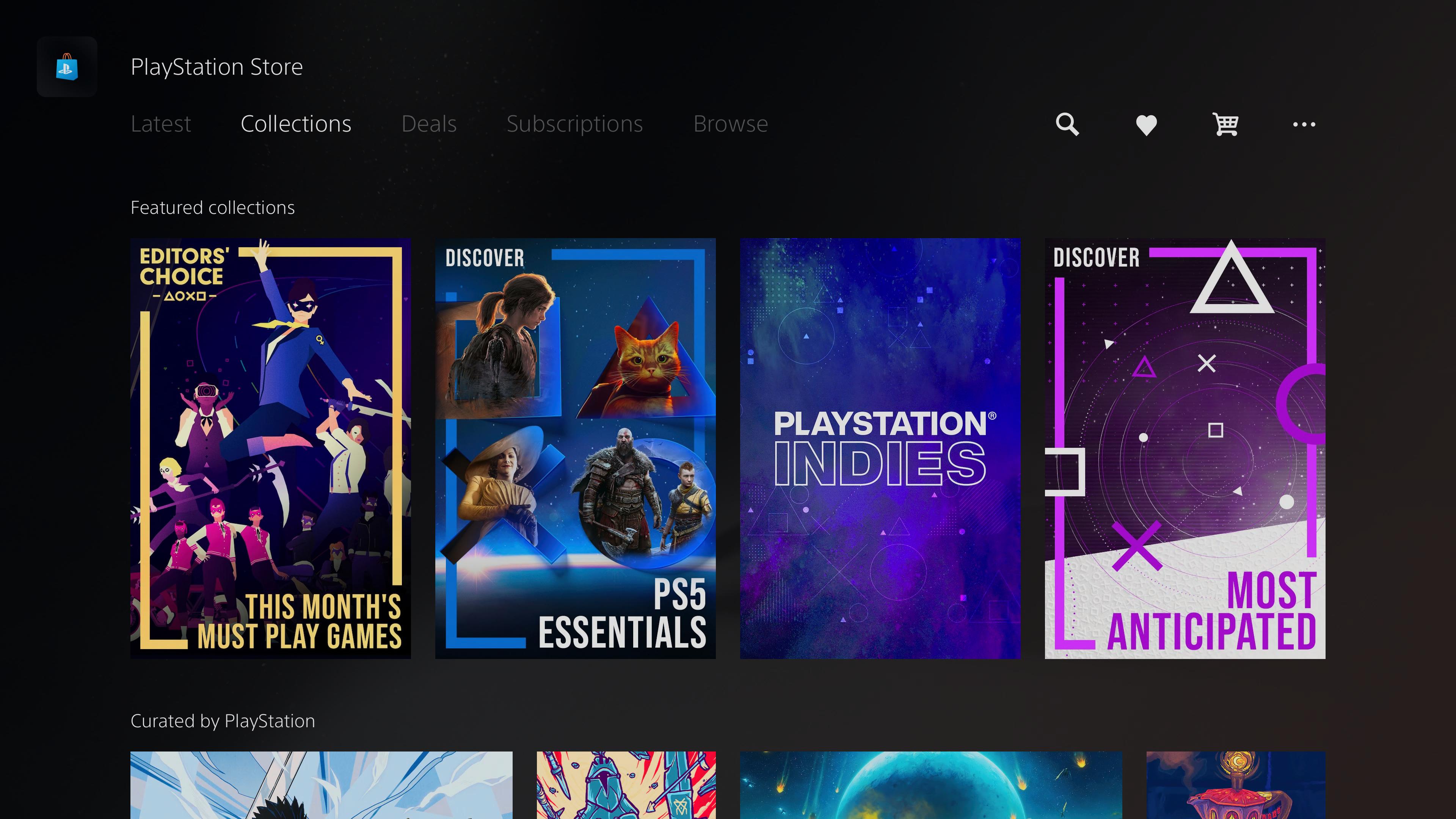
While all this legal and legislative stuff plays out in the background, there is something much simpler Sony could be doing right now. Push Square editor Sammy Barker put together a list of ways Sony needs to improve the PS Store if this all-digital future is actually happening, and I want to go through a few of these because I agree with most of it.
A proper refund policy. Totally agree. Right now Sony's refund policy is basically nothing. You can only get a refund if you have not started downloading the game. The second you start pulling data, you are locked in no matter what. Steam gives you two hours of playtime to figure out if a game is for you. That is a real policy. What Sony has right now barely qualifies as one.
The ability to trade and sell digital games. I am honestly not sure how feasible this actually is once you dig into it, and I think it goes right back into the bigger question of whether you actually own your digital license in the first place. If you don't really own it, what are you even selling. But I do agree with the underlying idea. You should at minimum be able to give something you bought to someone else if you want to. That is a basic thing physical media always allowed and digital just took away without asking.
And this goes further than just gifting a game to a friend. Under Sony's current terms of service, your PSN account cannot be transferred to anyone, period. If something happens to you, your entire digital library disappears with you. Years of purchases, just gone, with no next of kin option, no way to pass any of it down. That's not a minor inconvenience. That's the clearest possible proof that you never actually owned any of it in the first place. You were just renting it for as long as you were alive to log in.
Gifting is essential. Full agreement here, no notes. This should have existed years ago.
A working wishlist, richer product pages, and better discoverability. Also agree, and I think this points to something bigger. If all digital really is the future, the entire infrastructure needs to level up across the board. There cannot be any more hiccups or half built features. The storefront itself needs to feel robust. Look at how Steam handles this. Community reviews, curated lists, actual engagement built into the page for every single game. PlayStation Store still feels like an afterthought compared to that.
Deeper discounts. Just look at the Steam model. People are loyal to that platform for a reason, and a big part of it is that the sales are actually good and happen often. Sony should be looking closely at why that system works instead of leaving money and goodwill on the table.
A loyalty program. This one actually gets me a little heated. Why did they get rid of PlayStation Stars? Bring it back, and this time actually do something meaningful with the trophies and campaigns people put real time into. Have some kind of ongoing system that gives you free or discounted stuff based on your engagement with the platform. That is good for goodwill and it is good business. There is no reason for that to not exist in 2026.
I know I am in the majority in terms of buying habits. The market data proves it. I buy almost everything digitally. I rarely buy physical anymore. But I am in the minority in terms of actually caring about what that means.
Most people who do the first one have never thought about the second. That doesn't mean I want to surrender ownership just because I've accepted digital distribution. I still think this is a shitty situation. I think physical should remain an option, and I think choice matters. But I also see the writing on the wall. Fighting to save the disc is a dying fight.
The energy being spent on saving the disc is aimed at the wrong target entirely. The disc was already dying for over a decade before Sony made it official. What actually needs fixing, and what will actually protect people going forward across every form of digital media, is real enforceable digital ownership rights. Real access to what you paid for. Real protection against a company quietly deciding your license does not mean what you thought it meant.
That fight is bigger than PlayStation. It is bigger than gaming. And it is the one actually worth having.